
Guided Training
How to become an Adventure Guide (including mountain guiding)
An Adventure Guide is a type of tourist guide. Under the banner Adventure Guides are found the various types of Mountain Guides including Abseil Guides.
The other 3 types of guides are Cultural Guides (who for example, visit museums), Field Guides (who operate in game reserves) and Nature Guides who would operate in perhaps a nature reserve. All guides are subject to the Tourism Act no.72 of 1993. This means that the 3 conditions listed below must be met:
- Register as a Tourist Guide with the relevant Provincial Registrar.
- Be in possession of a certificate of competency issued by the South African Qualifications Authority (SAQA).
- Sign and adhere to the code of conduct and ethics provided by the Provincial registrar.
The process
- Complete a skills program called a Generic Adventure Site Guide Certificate (GASG). Your GASG must have the scope for the activity you wish to guide.
- Select a scope within which you want to qualify. E.g. Mountain Walking Guide.
- Go through the training and assessment process.
- Be found competent and receive a certificate of competence from the training provider.
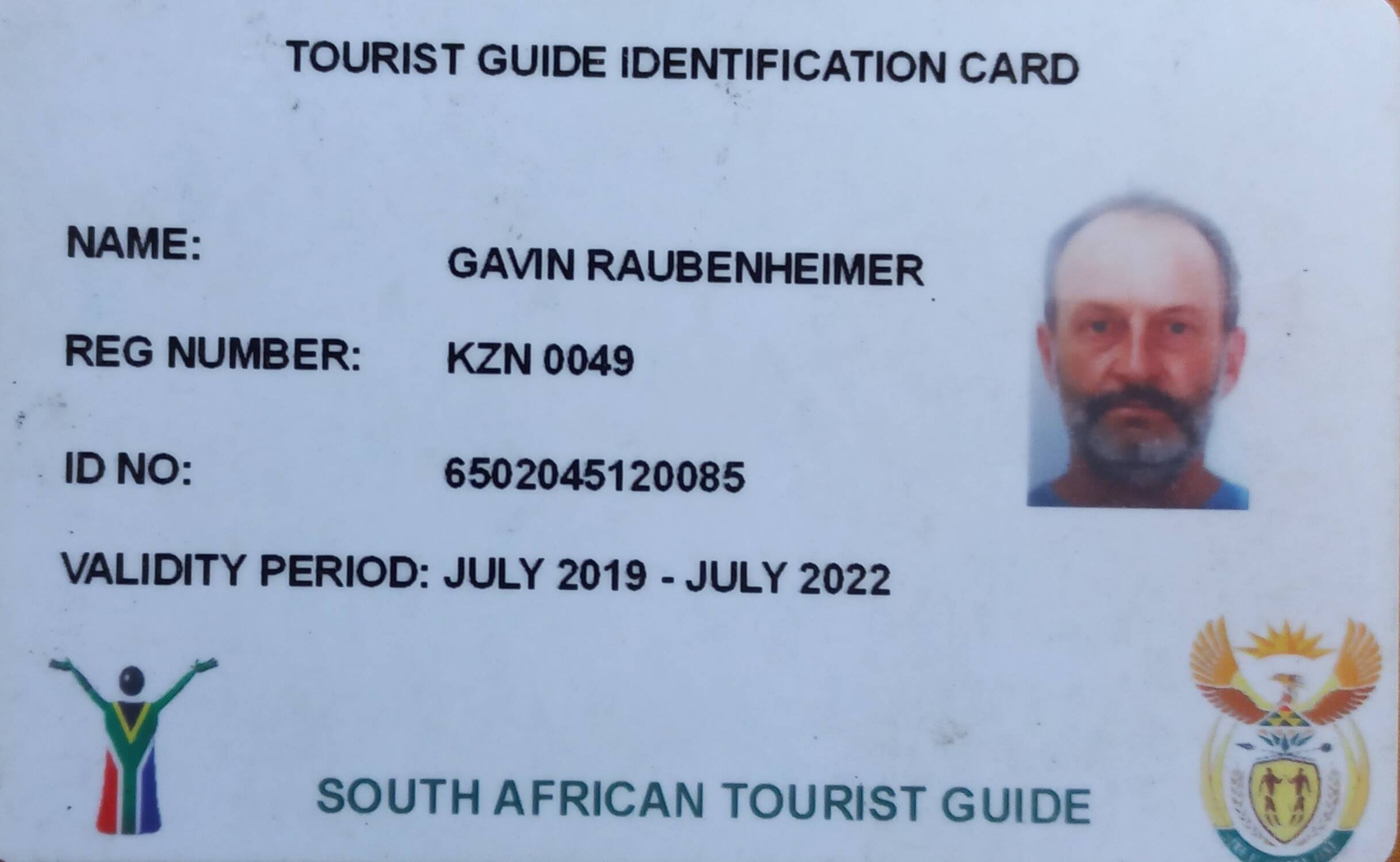
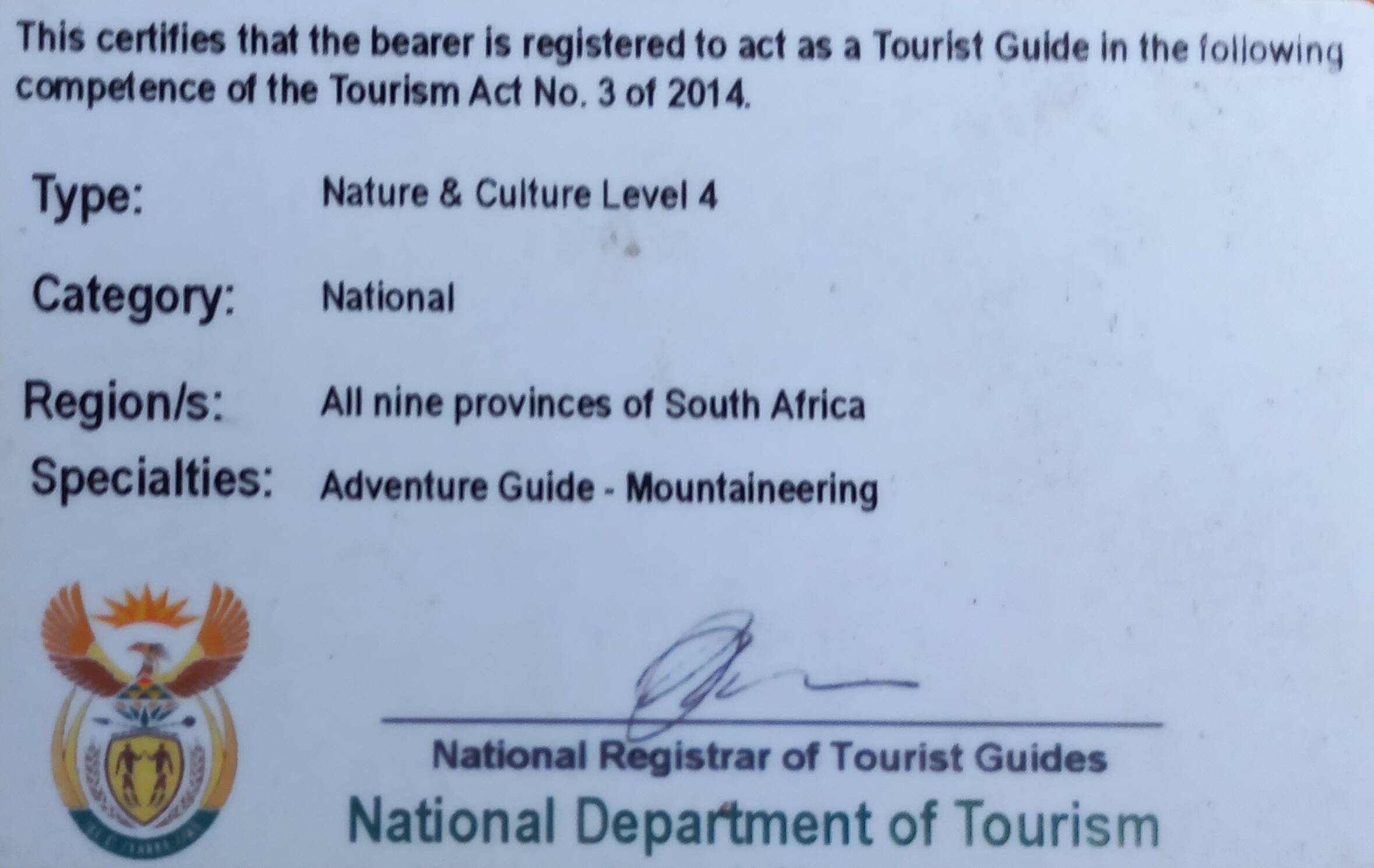
- Take this certificate along with an ID photo and a level 2 First Aid and register with your provincial registrar of guides. The registrar issues you with a guides ID card.
- You are now a legal Adventure Guide.
Obtaining a Generic Adventure Site Guide certificate
The training provider that you register with for your GASG will take you through an assessment process. During the course of this assessment you will need to complete the following:
- Practical assessments
- Theoretical assessments
- A logbook proving your experience within the field you wish to guide.
The assessments will deal with the general skills needed to operate as an adventure guide, but depending on your scope, will also include the technical skills required for your chosen adventure activity you want to guide.
All of the above assessments and documentation will be put together in a Portfolio of Evidence, which will then be submitted to CATHSSETA. If you have been found competent, you will be issued with your certificate of competency. You will then be able to go to your provincial registrar with your first aid certificate to register as a guide.
Scope
The GASG that you obtain will allow you to register as a guide only within the scope for which you have been trained. This means that if you for instance, qualified as a Mountain Walking guide, you will only be able to guide people within that activity. As a Mountain Walking guide, you will not be able to guide clients in abseiling.
Once you have been assessed for these skills and have been found competent, you will be able to update your GASG and card and begin guiding in these new activities.
An Adventure Site Guide can be a National Qualification provided your logbook shows that you have sufficient experience in at least 3 of the provinces.
Sleeping Bags
Sleeping bags are very important parts of a mountain walker’s equipment. They will be the main source of warmth during the coldest times of day and night. They differ in two main areas, firstly in their shape and secondly in what they are filled with.
Regarding shape they are basically either rectangular or a mummy type shape. The rectangular type has a large area around the leg area making for a more comfortable and looser feel. It is also easier to manufacture and so is cheaper in price. This shape however, also means that there is more area to heat up by the body (colder) and more fabric used which makes it heavier than necessary. Mummy type bags on the other hand are warmer, lighter and are the preferred shape of any properly designed product.
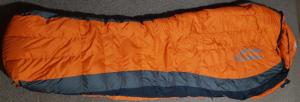
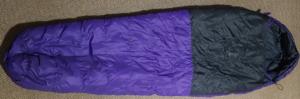 Mummy shaped sleeping bag with cowl
The filling inside a sleeping bag gives the bag loft, which is the amount of thickness of the layers when un-rolled. This gives a good indication of how much warmth the bag potentially can retain. The filling inside a sleeping bag can be roughly divided into 3 main types: cheap synthetic, hollowfibre and down. Cheap synthetic is exactly what the name implies and should only be considered for casual trips in warm climates. It has little real warmth or lightness, but is cheap. Hollowfibre is a filling made of very fine hollow filaments that trap air inside them and between them. It is a fairly warm filling and retains its warmth when wet. They have a life span of about 10 years if looked after. It has the advantage of being cheaper than down, however, it will not compress as well as down and is also heavier. Down, on the other hand is the first choice for high quality sleeping bags. They are light, have more warmth per weight of filling, compress more easily and last forever if looked after well. The disadvantages are that they lose most of their warmth when wet, are hard to get dry and are far more expensive. The advantages of down far out weigh the disadvantages, making down the preferred choice in most instances.
The internal construction of sleeping bags is very important. In both hollowfibre and down bags there are two major design types. These are sewn-through type construction and a baffle type construction. Both these construction types are to create separate compartments so that the filling does not shift around and remains fairly evenly spread thoughout the bag.
The sewn-though type allows for warmth to escape through the constricted areas where the inner and outer pieces of fabric are brought together. This is a major disadvantage and is not used on well-constructed sleeping bags.
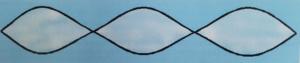 Sewn through construction. Cheap and light bags.
Baffle type bags have compartments where the two outer layers of fabric are kept apart by a separate inner wall. These compartments have different designs, which could be a zigzag pattern or rectangular shape depending on the manufacture.
 Zigzag baffle type
 Box wall type
Box wall types are good but not the warmest, they are lighter than V type and costs less.
 Brick wall type
Brick wall types have good insulation, are heavier and more costly, expedition type bags.
 Trapevoid type
Trapevoid types are a combination of box and V types. They are often used in high quality bags.
Most sleeping bags have zips in them to make getting in and out of the bag more comfortable. Zips can vary from a few centimetres in length to a full zip, which runs all the way along one side and across the foot area. Two identical bags of this type can usually be zipped together to form a double sleeping bag.
- « Previous Page
- 1
- …
- 30
- 31
- 32
- 33
- 34
- …
- 38
- Next Page »